Agents should feel like colleagues
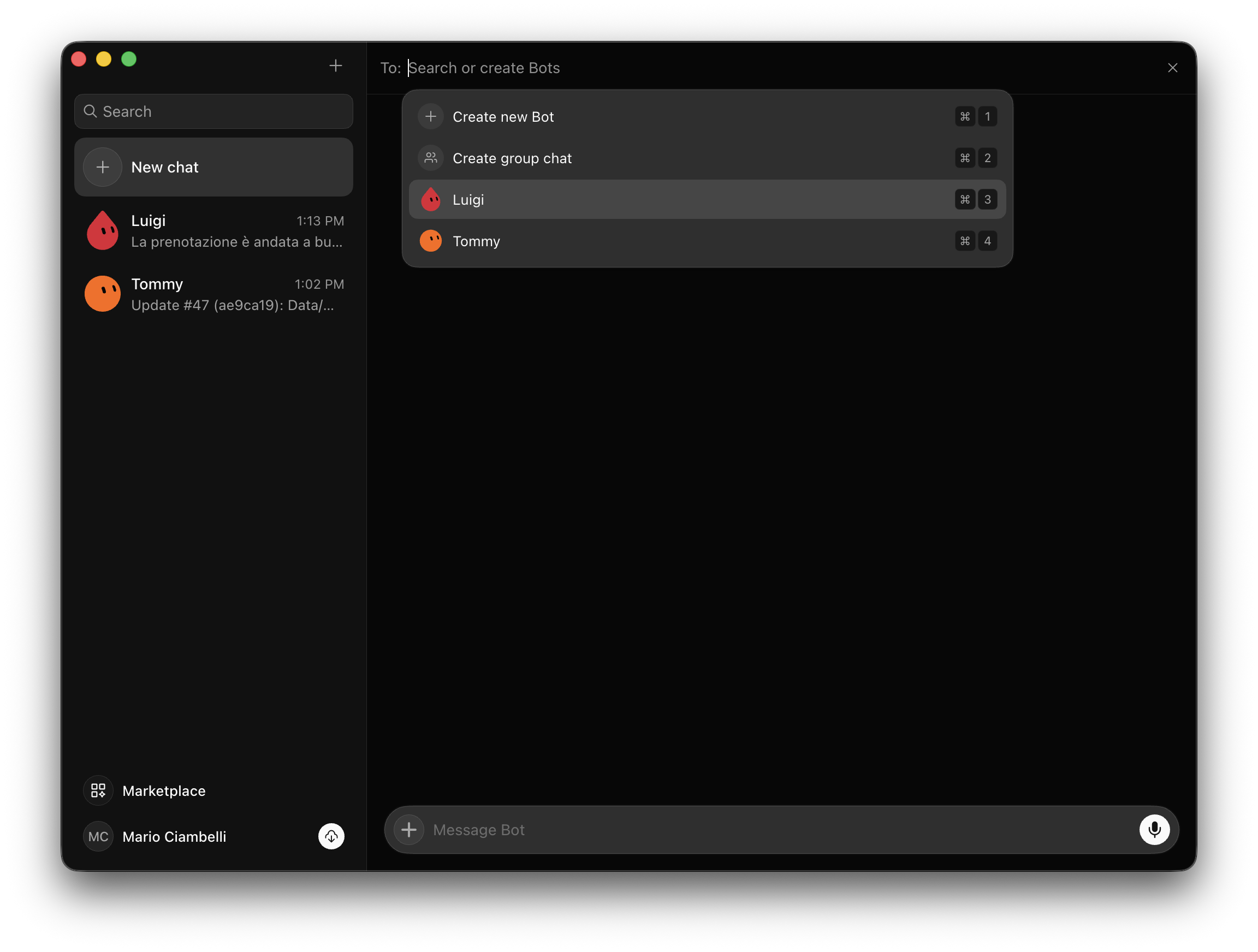
I opened Grok and made two agents. One is Luigi — a red drop. The other is Tommy — an orange smile. I named them. I picked their faces. And something in me relaxed.
That's a small thing to notice. Naming a bot. Giving it a color. It's the kind of personalization product teams ship as a “delight” feature and then forget about. Sitting with it, I don't think it's delight at all. I think it's the missing piece.
We don't want to talk to bots
Most AI products still greet you like a utility. A blank chat. A generic avatar. A name like Assistant, or Copilot, or nothing at all. You type into a void and a very smart void types back. It works. It is also strangely lonely.
Humans don't collaborate with unnamed services. We collaborate with people. We remember a face, a name, a tone. The moment an agent is Luigi — not “the bot” — my brain files it differently. I start to treat it like someone I work with, not a search box with extra steps.
That's the need I keep seeing, and almost nobody is designing for: we need to feel agents as colleagues, not as tools wearing a chat UI.
A name and a face are not decoration
Grok let me do two very simple things: give the agent a name, and visually customize it. That's it. No personality questionnaire. No ten-step onboarding. A name, and a face.
And it's enough. Because identity is how humans start a relationship. Once Luigi looks like Luigi, I talk to him differently. I keep the thread. I remember what I asked him yesterday. The agent stops being a session and starts being a presence.
This is what AI products are missing. Not another model picker. Not another prompt library. A human layer — the permission to make the agent yours, so it can sit next to you the way a colleague would.
If agents are going to spend the day in our work, they can't keep arriving as interchangeable chat boxes. Give them a name. Give them a face. Let people make them feel like colleagues — because that's what we actually need them to be.